3205 E Thayer Ave, Bismarck, ND 58501
+1 (701) 807-8088
Mon–Fri: 7:00 AM–6:00 PM
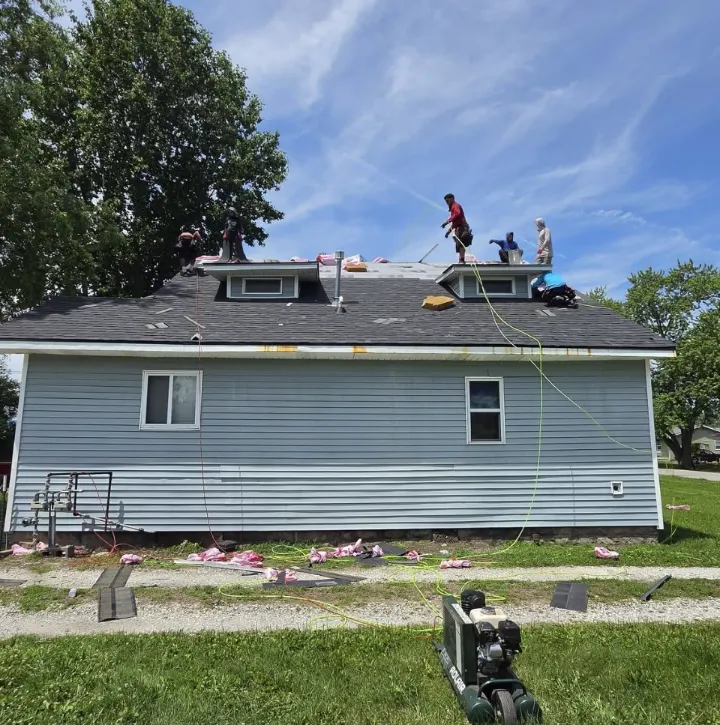
Storm damage roof inspection and repair crew working in Bismarck, North Dakota
Built for Hail · Wind · Derechos · Severe Storms
Bismarck’s Local Storm Damage Roofing Professionals

Storm Damage Roofing in Bismarck, ND

Honest Inspections, Thorough Documentation

Storm damage is rarely obvious from the ground. Bismarck Exterior Pros inspects, documents, and honestly assesses hail, wind, and severe storm damage on roofs throughout Bismarck, Mandan, Lincoln, and surrounding Burleigh and Morton County communities — then explains your repair or replacement options in plain terms.

Serving Bismarck, Mandan & Lincoln
Photo DocumentationFor Insurance Claims
Honest CallRepair vs Replace
5+ YearsLocal Experience

Storm Damage Signals

Signs Your Bismarck Roof Has Storm Damage.

Some storm damage is obvious from the driveway. Some of it is invisible without getting on the roof and knowing exactly what to look for. Here is what we check.

Post-Storm Condition Check
Form BEP–03 Page 1 of 1
01 Visible Damage
From the Ground
  • Missing shingles physically blown off the roof. A fallen branch. Dents in gutters large enough to see from the driveway. These problems are obvious and urgent, and they need immediate attention to prevent water entry.

  • Shingles lifted and laid back down with their factory seal broken. These appear intact from below but no longer adhere to the shingle beneath them. Water drives under them on the next rainy day.

02 Hidden Damage
Requires Roof Access
  • Hail bruising on the shingle mat beneath the granule surface. Broken adhesive seals on tabs that have laid back down flat. Granule displacement across large sections of the shingle field that is not visible from ground level.

  • Impact damage to pipe boots and metal vents. Creased or lifted flashing at penetrations. Compromised valley flashing where two roof planes meet. A bruised shingle mat does not leak right away, but it accelerates the aging process.

03 Storm Event Evidence
Metal Components & Structure
  • Dented gutters, downspouts, drip edge, pipe boots, ridge vents, and flashing. Soft metal components dent visibly. These dents are often the clearest evidence of a hail event’s intensity, even when shingle damage is subtle.

  • Ridge cap shingles are particularly vulnerable to wind damage because they sit at the peak of the roof and take uplift pressure from multiple directions simultaneously. Hip sections and rake edges take disproportionate wind stress.

Our hail damage signs guide covers the visual indicators in more detail with descriptions of what each looks like at different stages after impact.

Field Notes · Storm Market

Why Bismarck Is One of the More Demanding Storm Markets in the Northern Plains.

Here is something worth understanding about where you live. Bismarck sits at a genuinely active intersection of severe weather patterns.

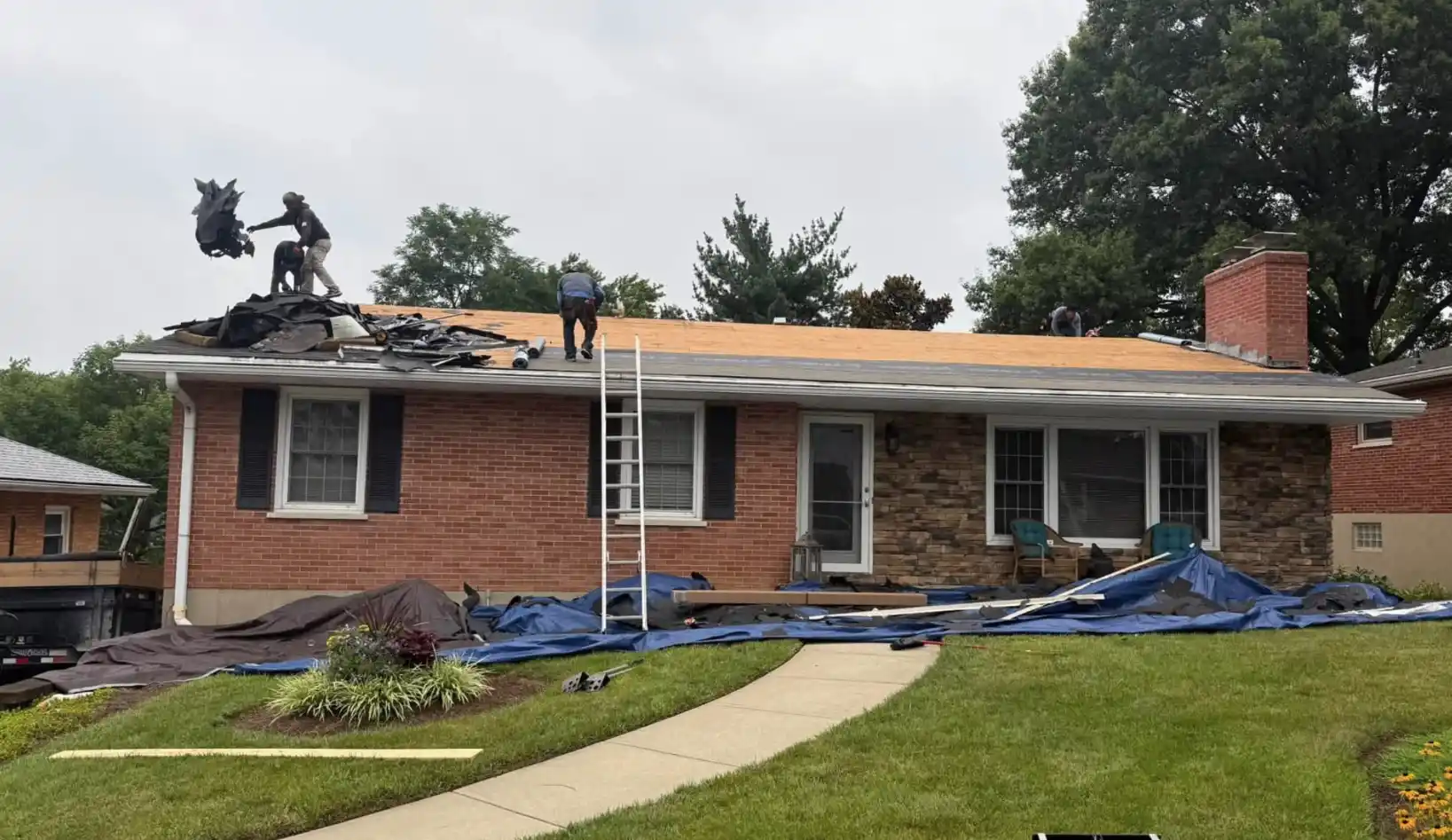
Storm damage roof restoration in Bismarck, North Dakota, showing tear-off of damaged shingles and exposed decking by Bismarck Exterior Pros.
01 · The Storm Corridor

An Active Intersection of Severe Weather.

The northern plains hail corridor runs directly through central North Dakota. Derechos and straight line wind events crossing the Missouri River corridor produce sustained gusts that put enormous uplift pressure on roofing systems.

In our experience, Bismarck homeowners who schedule a professional inspection after any significant storm event are consistently better positioned than those who wait to see whether a problem develops. By the time a problem becomes visible indoors, the damage outside has usually been building for longer than it looks.

02

Spring Brings Hail

Bismarck-Mandan gets meaningful hail events most years during May, June, and July. Some years are worse than others. The hailstones that accompany spring and early summer thunderstorms in this region are not always large, but they do not need to be large to damage roofing materials.

One inch hail hitting at speed is enough to knock significant granule loss into your gutters and bruise the mat beneath your shingles without leaving marks visible from a ladder.

03

Summer Brings Severe Thunderstorms

Derechos and straight line wind events crossing the Missouri River corridor produce sustained gusts that put enormous uplift pressure on roofing systems.

These are not tornado force winds, but 60 to 80 mph gusts are enough to lift shingle tabs, break factory adhesive seals, and displace ridge cap sections on roofs that were not fastened to wind resistance specifications for this market.

04

Fall Brings Transition Storms

Late season severe weather events before the ground freezes can combine hail, wind, and cold rain.

Damage from fall storms sometimes goes undetected through winter and surfaces as interior leaks in spring, long after the weather event that caused it.

05

Why Timing Matters

By the time a problem becomes visible indoors, the damage outside has usually been building for longer than it looks. A bruised shingle mat does not leak right away. A broken tab seal does not open a visible hole. What both do is accelerate the aging process of the shingle and reduce the roof’s resistance to the next weather event.

A shingle that was bruised in a June hailstorm and then hit by another storm in August has substantially less protection than an undamaged shingle facing the same conditions.

06

Visible vs Hidden Damage

Visible damage is what most people think of. Missing shingles. A fallen branch. Dents in gutters large enough to see from the driveway. Hidden damage is more common and more misunderstood: hail bruising on the shingle mat, broken adhesive seals, granule displacement, impact damage to pipe boots and metal vents.

This is why professional inspection after a storm matters, even when your roof looks fine from the street.

07

Protecting Yourself From Out-of-State Storm Chasers

After every significant hailstorm in the Bismarck area, out of state roofing crews arrive in force. They drive through neighborhoods, knock on doors, and offer to inspect your roof on the spot. Sometimes they offer to handle everything with your insurance company. Sometimes they pressure for immediate contract signatures.

Here is the reality. These crews arrive for the storm, do work quickly to maximize volume, and leave the area before warranty issues surface. When a problem shows up on your new roof next winter, there is often no one to call. The company may no longer operate in North Dakota. The warranty may be effectively unenforceable.

A legitimate local roofing contractor has a verifiable business address in the area, a documented history in the community, and a genuine stake in the quality of their work because they will still be here when you call with a problem. They do not knock doors after storms. They do not pressure immediate signatures. And they do not promise you a free roof.

We have been serving Bismarck and the surrounding area for over 20 years. We are here before the storm. We are here after. And we are here when you call next year with a question about the work we did.

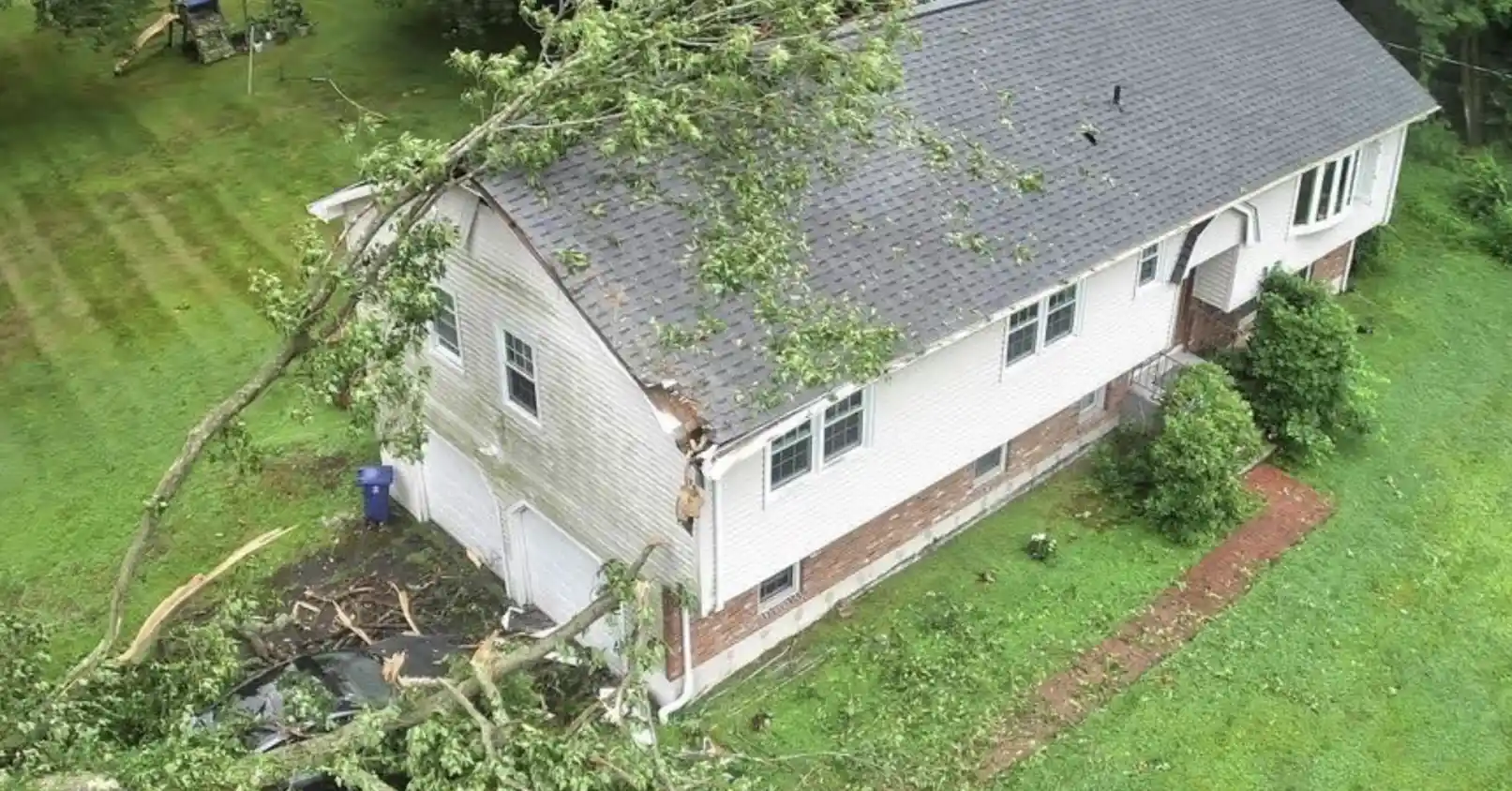
Storm damage in Bismarck, North Dakota, showing a fallen tree on a residential roof, professional emergency roof repair services by Bismarck Exterior Pros.

For more detail on hail and wind indicators, see our hail damage signs guide and our wind damage roofing page .

Hail and Wind Indicators We Check

Knowing what to look for helps you understand what our inspectors are doing when we get on your roof after a storm.

Hail Damage Indicators

Hail impact on asphalt shingles leaves circular or irregular marks where granules have been displaced and the darker asphalt mat beneath is exposed. In fresh damage, these marks sometimes have a slight shine. Over time, UV exposure darkens the exposed mat area and the damage becomes harder to distinguish from normal wear, which is one reason prompt inspection after a storm matters.

Beyond the shingle field, we check every metal component on the roof. Gutters, downspouts, drip edge, pipe boots, ridge vents, and flashing all absorb hail impact. Soft metal components dent visibly. These dents on metal components are often the clearest evidence of a hail event’s intensity, even when shingle damage is subtle. We photograph all of it because your insurance adjuster needs documentation that ties the damage to a specific storm event. Our hail damage signs guide covers the visual indicators in more detail.

Wind Damage Indicators

Wind damage presents differently. The most obvious is missing shingles or sections physically displaced by high winds. Less obvious are shingles that have been lifted and laid back down with their factory seal broken. These appear intact from below but no longer adhere to the shingle beneath them. Water drives under them on the next rainy day.

Ridge cap shingles are particularly vulnerable to wind damage because they sit at the peak of the roof and take uplift pressure from multiple directions simultaneously. Hip sections and rake edges along the sides of the roof also take disproportionate wind stress. We check all of these specifically after a wind event, not just the main shingle field. For specific details, our wind damage roofing page covers the topic directly.

The First Hour Matters More Than Most Homeowners Realize

Here is the practical sequence we recommend.

Stay Off the Roof

This is non negotiable. A wet roof after a storm is slippery, and storm compromised sections may not support weight safely. Inspecting a damaged roof is our job, not yours.

Document From the Ground

Walk the perimeter of your property and take dated photographs of anything you can see. Dented gutters. Shingles in the yard. Window screen impressions. Damaged AC unit fins. These are evidence of a storm event’s intensity and become part of your documentation file. Your phone’s camera already timestamps photos automatically.

Do Not Sign Anything With Door-to-Door Crews

After every significant hailstorm in Bismarck, out of state crews appear in neighborhoods offering fast inspections and immediate contracts. We strongly encourage you not to sign anything on the spot, regardless of how the offer is framed. A legitimate local contractor will not pressure you for an immediate signature. Take the card, say you will call, and then contact a local contractor you can verify.

Note the Storm Date and Time

Insurance carriers tie claims to specific documented weather events. Knowing the exact date helps establish that the damage is storm related rather than pre existing wear.

Call for a Professional Inspection Before Contacting Insurance

This is the sequence that matters most. A professional inspection gives you documented evidence of what the storm did before you start the claims process. Going to your carrier without your own documentation puts you at a disadvantage.

A Methodical Post-Storm Inspection

Our post storm inspection is methodical. We are not looking for whether the roof has any damage at all. We are documenting specifically what the storm caused, how widespread it is, and what the implications are for the roof’s ongoing performance.

What We Examine

We inspect the full shingle field in sections, noting impact marks, granule displacement patterns, and tab condition. We check every metal component for impact evidence. We examine flashing at all penetrations and transitions. We look at the ridge, hips, and rake edges. We check valleys. We examine pipe boots and any other rubber components. We photograph every finding with enough detail to show the damage clearly.

What You Receive

You receive a written condition summary explaining what we found, where we found it, and what it means. That summary, along with the photographic record, is what you bring to your insurance carrier when you open a claim.

Why This Documentation Matters

This documentation process is what separates a claim that gets taken seriously from one that gets minimized. An adjuster reviewing a thorough photo report with clearly marked damage locations and a professional written summary has much less room to attribute findings to pre existing conditions or normal wear.

A Genuinely Important Distinction

This is a genuinely important distinction that most storm damage pages gloss over. Here is how we think about it honestly.

When Repair Is the Right Answer

Storm damage repair is the right answer when the damage is concentrated in specific areas, the overall roof system is still in serviceable condition, and a repair scope addresses the actual damage without leaving compromised sections that will create problems within the next few years. A section of lifted shingles, a damaged valley, a compromised pipe boot after a hail event, all of these can be legitimate repair scopes on a roof that is otherwise performing well.

When Replacement Is the Right Answer

Storm triggered roof replacement becomes the right answer when hail or wind damage is widespread across the entire shingle field, when the roof was already approaching the end of its useful service life, or when the cumulative damage makes a repair scope impractical. A roof that absorbs a significant hail event after 18 years of North Dakota weather exposure may have damage across every slope that no targeted repair can fully address.

Our Honest Recommendation

We tell you which category your specific situation falls into based on what we actually find during inspection. Not based on what produces the larger project scope. This distinction is part of why we operate the way we do. For the full decision framework, our repair or replace guide covers the factors that determine which direction makes sense.

What We Can and Cannot Do

Every insurance conversation we have with homeowners starts with the same honest statement. We can document what the storm did to your roof. We cannot guarantee what your insurance carrier will do with that documentation.

Named Perils and Policy Terms

Most standard North Dakota homeowner policies cover hail and windstorm damage as named perils. Whether a specific claim is approved depends on your policy terms, the deductible structure, the documented damage, and how your carrier evaluates the findings. Policies vary significantly in how they handle roof claims, particularly for older roofs.

ACV vs RCV

Two terms matter most in storm roof claims. Actual Cash Value policies pay the depreciated value of your roof based on its age. An older roof receives a smaller payout because the policy accounts for how much useful life it had remaining. Replacement Cost Value policies pay the actual cost to replace the damaged roof with new materials. The difference between these two policy types can be substantial on an older Bismarck roof. We encourage you to review your own policy before a storm rather than discovering the distinction during a claim.

Filing Timing in North Dakota

Based on widely documented standard practice in this state, most homeowner policies require storm damage claims to be filed within one year of the damage event. Waiting to see if a problem develops before filing can put you outside the coverage window. If a significant storm has affected your neighborhood, getting an inspection done promptly preserves your options. For a detailed walkthrough of the documentation and claim process, our storm damage insurance guide covers it step by step.

Where We Work Across the Metro

Our storm damage inspection and repair service covers all of Bismarck and extends throughout the metro area.

Mandan

Mandan, directly across the Missouri River, is a primary part of our service area and faces the same storm corridor that affects Bismarck. Our roofing services in Mandan page covers the specifics.

Lincoln

Lincoln, growing southeast of Bismarck, is also regularly in our service area. Our roofing services in Lincoln page covers coverage there.

Commercial Property Owners

For commercial property owners and property managers dealing with storm damage across multiple buildings, our commercial roofing page covers the specific considerations that come with commercial storm damage response. For extended communities throughout Burleigh and Morton County, our service areas page has full coverage details.

When the Roof Is Immediately Open to the Elements

Sometimes a storm leaves a roof immediately open to the elements. A large section of shingles gone. A branch through the roof deck. Lifted sections in multiple areas during an active rain event.

What We Do

In those situations, emergency stabilization is the immediate priority. Temporary weather protection stops active water entry and buys time to complete a permanent inspection and repair or replacement scope when conditions allow.

What to Expect

For urgent storm situations, our emergency roof repair page covers what to expect and what we can do to stabilize your roof quickly.

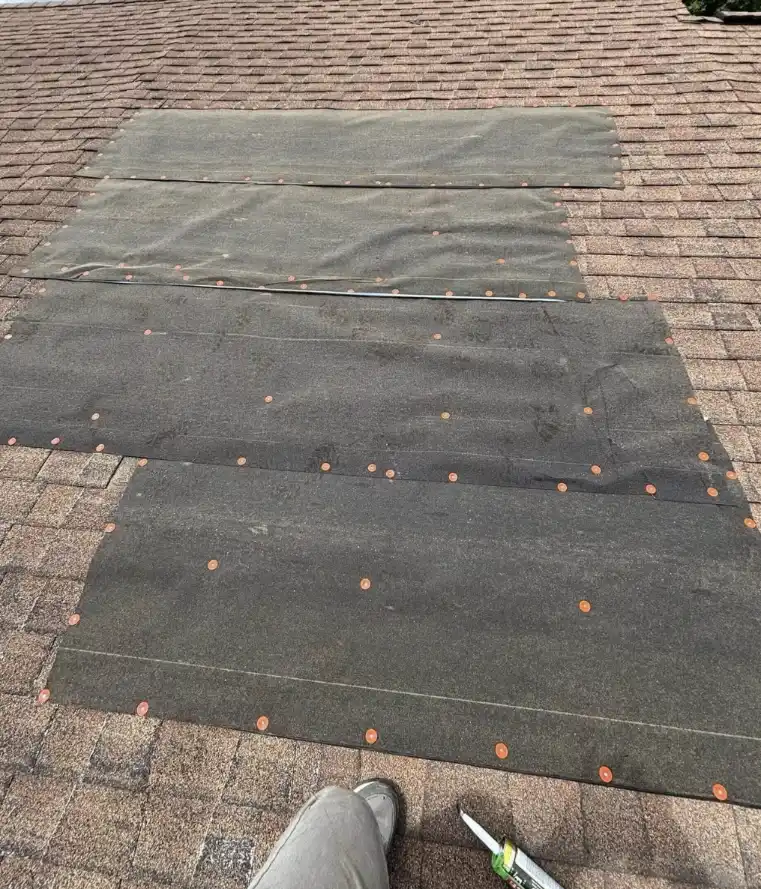
Storm damage roof repair in Bismarck, North Dakota, showing temporary tarp installation to protect damaged shingles by Bismarck Exterior Pros.
  • Stay off the roof, document visible damage from the ground with dated photos, note the storm date, and call for a professional inspection before contacting your insurance carrier. Do not sign anything with door to door crews. The sequence matters.

  • Honestly, you often cannot tell from the ground. Hail bruising on shingle mats, broken tab seals from wind, and impact damage to metal components are not visible without getting on the roof and knowing what to look for. A professional inspection after any significant storm event is the only reliable way to know your roof’s actual condition.

  • Most standard North Dakota homeowner policies cover hail and windstorm damage. Whether your specific claim is approved depends on your policy terms, how the damage is documented, and your carrier’s evaluation. We document legitimate damage thoroughly. We never guarantee claim approval or settlement amounts.

  • Standard practice in this state is typically one year from the date of the storm event. Filing promptly after a storm is always the safer approach. Waiting to see if a problem develops risks missing the coverage window and makes it harder to tie damage to a specific event.

  • Actual Cash Value pays your roof’s depreciated worth based on age. Replacement Cost Value pays the full cost to replace it. If you have an RCV policy, your carrier typically pays the ACV amount first and releases the held back depreciation after the work is completed.

    The policy type you carry significantly affects your out of pocket cost. Check your own policy before a storm.

  • It depends on the extent and distribution of damage and your roof’s overall condition. Localized damage on a roof with useful life remaining points toward repair. Widespread damage across the full shingle field, particularly on an aging roof, often points toward replacement.

    We assess your specific situation honestly and tell you which direction makes sense based on what we find, not based on what produces the larger scope.

  • Verify a North Dakota contractor license, liability and workers compensation insurance, a physical local address, and verifiable local reviews before signing anything. Avoid any contractor who pressures you for an immediate signature or makes promises about what your insurance will cover.

  • Yes. We inspect and address storm damage on residential homes and commercial properties throughout the Bismarck market. Commercial storm damage often involves additional complexities around business continuity and documentation across larger roof areas.

Schedule Your Post-Storm Inspection

Call Bismarck Exterior Pros After a Storm.

The window between a storm and the decisions you make afterward matters more than most homeowners realize. Getting a professional inspection done before you contact your carrier, before you sign anything, and before hidden damage has time to worsen puts you in the strongest possible position.

We inspect thoroughly. We document honestly. We tell you what we found and what it means. No pressure. No guarantees we cannot keep. Just a straight conversation with a local contractor who will still be here when you call next year.

  • Licensed & Insured
  • 5+ Years Local Experience
  • Thorough Written Documentation
Call now to schedule your post-storm roof inspection.
Talk to a Local Roofer