3205 E Thayer Ave, Bismarck, ND 58501
+1 (701) 807-8088
Mon–Fri: 7:00 AM–6:00 PM
Emergency wind damage roof repair services by top Roofing Contractor Bismarck ND
Uplift · Adhesive Seal Failure · Straight Line Winds
Bismarck’s Local Wind Damage Roofing Professionals

Wind Damage Roofing in Bismarck, ND

The Damage You Often Cannot See From the Driveway

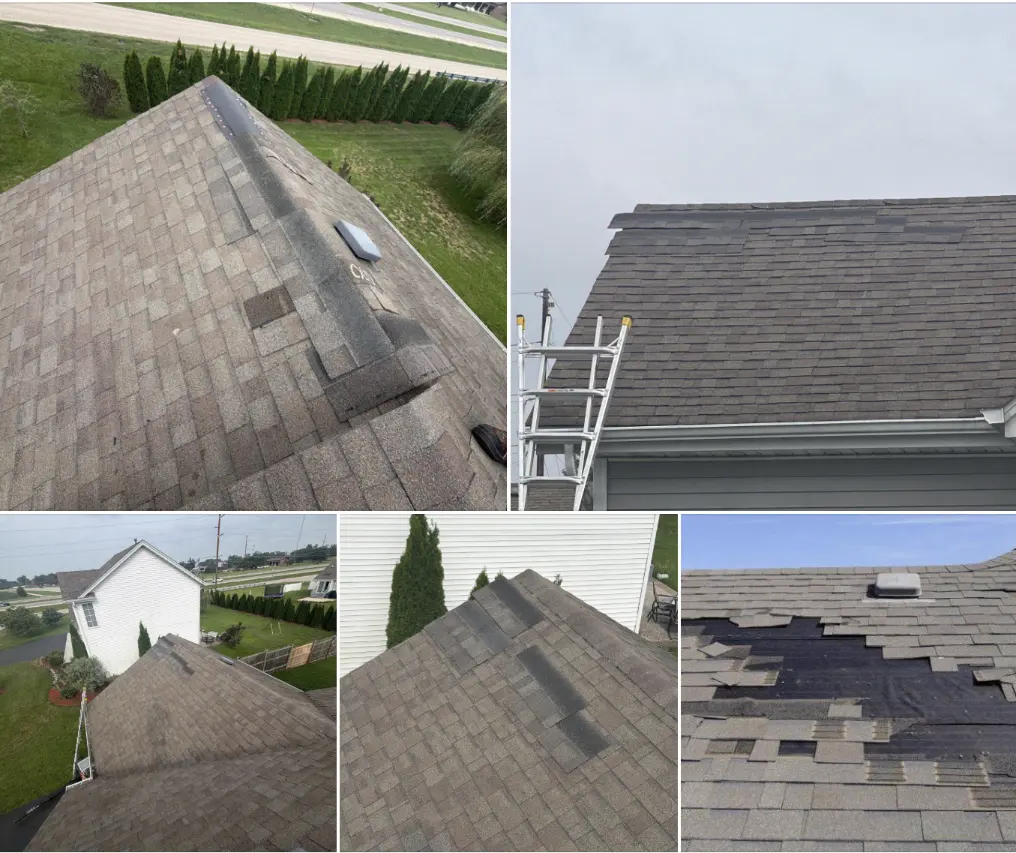
The most consequential wind damage is not the shingle that blew off — it is the shingle that lifted, broke its adhesive seal, and laid back flat. Bismarck Exterior Pros inspects wind-damaged roofs for homeowners across Bismarck, Mandan, Lincoln, and surrounding Burleigh and Morton County communities, and documents what the storm actually did.

Serving Bismarck, Mandan & Lincoln
Seal FailureDetection
Full PhotoDocumentation
5+ YearsLocal Experience

Wind Corridor & First Check

Why Wind Is a Constant and Serious Roofing Risk in Bismarck.

Bismarck sits on the open northern plains with minimal natural terrain protection from prevailing winds. Wind is not an occasional event in this market. It is a consistent presence. Here is what you can assess from the ground while waiting for a professional inspection.

Post Wind Event Ground Check
Form BEP–10 Page 1 of 1
01 The Wind Corridor
Storm Frequency & Pattern
  • Severe wind events in this market produce gusts regularly exceeding 60 miles per hour. Straight line wind events from derecho type systems moving across the northern plains can produce even higher gusts. At these speeds, roofing systems that were not installed to wind resistance specifications for this exposure zone show their vulnerabilities quickly.

  • The prevailing wind pattern in central North Dakota tends to come from the northwest and north for much of the year. This means roofing components on the north and northwest facing sections of a roof face the highest sustained wind stress. Ridge caps. Rake edges. The shingle field on those slopes. These are the areas we check first after a wind event.

02 From the Ground
What You Can See
  • From the driveway and the perimeter of your property, look for shingles or shingle pieces on the ground, in gutters, or in neighboring yards. Also look for exposed darker areas on the roof surface where shingles have shifted or been removed. Check ridge cap sections to see if any appear displaced along the peak line.

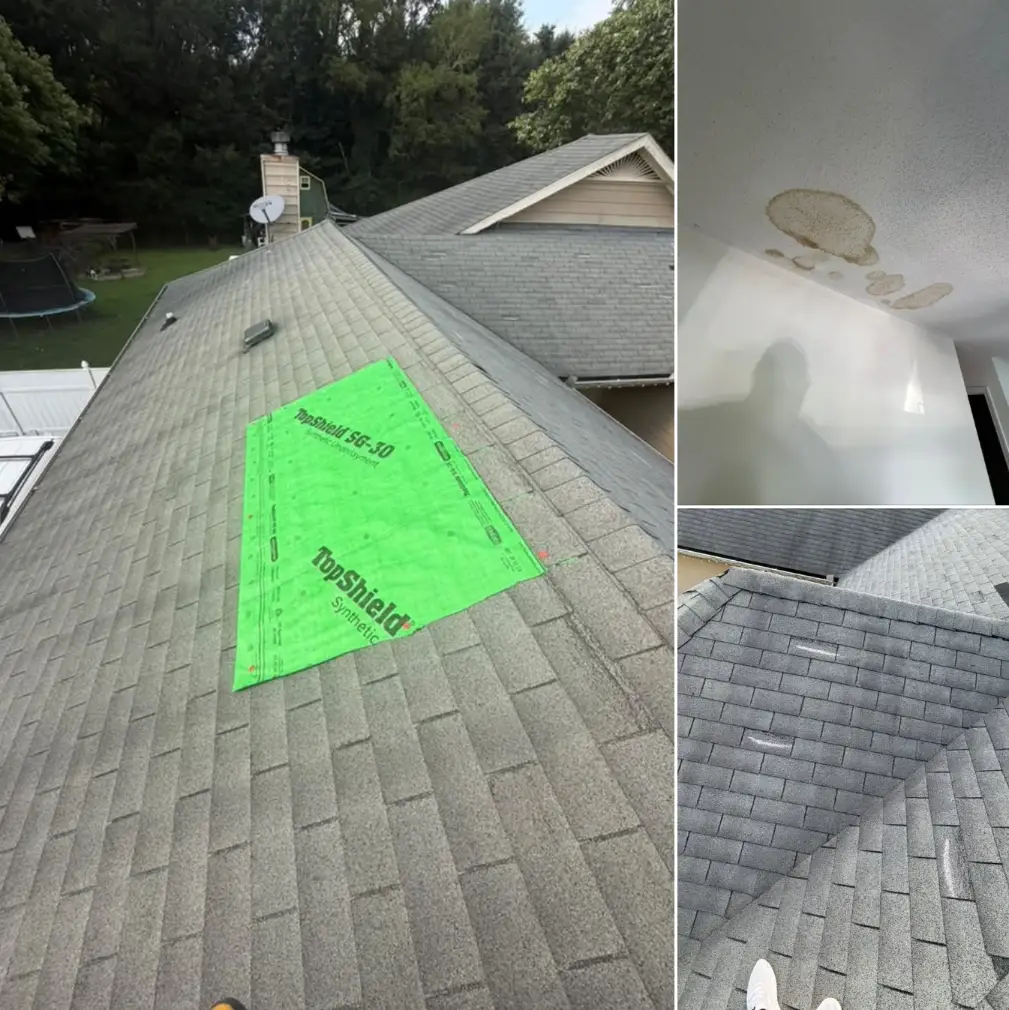
  • Look at gutters for any sections that appear pulled away from the fascia, which can indicate wind stress at the eave line. Also check soffits and fascia boards. Wind driven rain that gets behind lifted rake edge shingles often shows up as water staining or damage to the fascia board before it shows up as an interior ceiling stain.

03 Beyond Ground Level
What Requires Roof Access
  • What you cannot assess from the ground is the adhesive seal condition of the shingle field, the specific fastening integrity across the roof, the condition of flashing at penetrations and transitions, and the ridge and hip sections in the detail required to identify compromised seals.

  • Do not climb on your roof yourself after a wind event. Storm damaged or wet roofing creates genuine fall hazards that are not worth the risk of a ground level assessment you can get from a professional.

For the full documentation and claims process, our storm damage insurance guide covers the topic in detail.

Field Notes · How Wind Works

How Wind Actually Damages a Roofing System.

Understanding the mechanics of wind damage helps explain why professional inspection after a significant wind event is genuinely necessary even when a roof looks intact.

Wind damage roof leak repair experts from trusted Bismarck Roofing Company
01 · Uplift Force

Wind Pulls. It Does Not Just Push.

Wind does not simply blow shingles horizontally off a roof. It creates uplift. As wind moves over a roof surface, it creates a low pressure zone above the roof plane that pulls upward. This uplift force is highest at the edges of the roof, at the ridge, along the rakes, and at any point where the geometry creates accelerated wind flow.

The starter course at the eave edge is the roofing system first line of defense against this uplift. A properly installed starter course seals the bottom edge of the first course of shingles to the roof deck and prevents wind from getting under the leading edge.

From the eaves, uplift pressure tries to work its way up the roof by lifting each shingle tab and putting stress on the adhesive seal that holds the tab to the shingle beneath it. When that seal breaks, the tab lifts freely. When the wind stops, the tab lays back down. The break is invisible.

02

Adhesive Seal Failure

Factory applied asphalt shingles include an adhesive strip along the back of the tab that seals the shingle to the course beneath it when exposed to adequate temperature. This seal is what holds a shingle down in wind conditions beyond what the fasteners alone provide.

Once a wind event breaks that adhesive bond, the tab is functionally unsealed even though it appears attached. In Bismarck’s climate, a shingle tab that has lost its adhesive seal in a September wind event may lay flat throughout the cold months, appearing completely intact. The first warm spring rain drives water underneath it along the path that the broken seal would have blocked.

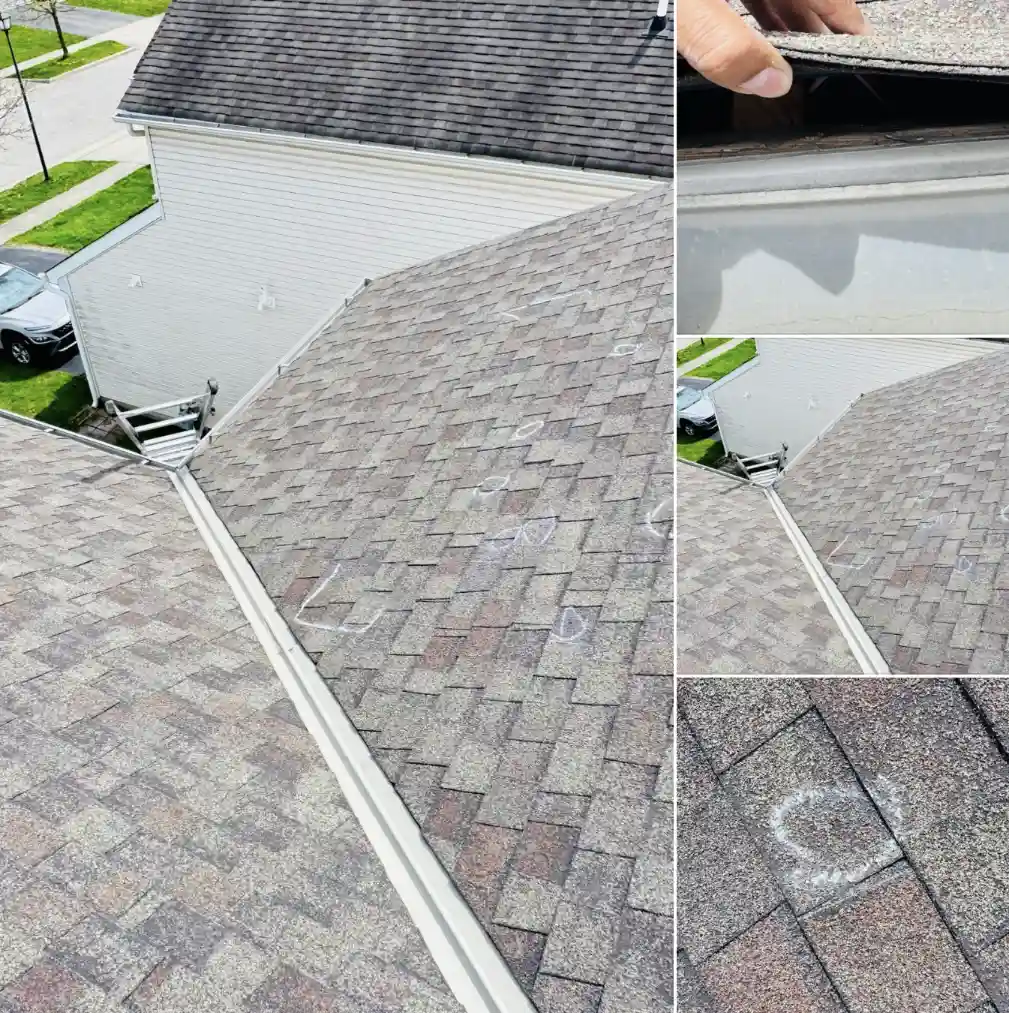
From the ground, a roof with twenty percent of its shingle tabs unsealed by wind looks identical to one that is fully intact. This is why we get on the roof to evaluate post wind conditions rather than assessing from a ladder or from ground level.

03

Ridge Cap and Hip Sections

Ridge cap shingles sit at the peak of the roof and receive uplift pressure from both directions simultaneously. They also extend over the ridge without the support of the underlying deck on the downwind side of the peak. Ridge caps that are improperly fastened, inadequately sealed, or simply at the end of their service life are among the first components to show visible wind damage.

Hip sections, where two roof slopes meet at an angled ridge running from peak to eave, face similar exposure. Wind that changes direction during a storm event can stress hip sections from multiple angles within a single wind event. We inspect every linear foot of ridge cap and hip treatment after a wind event.

04

Rake Edge and Valleys

The rake edge is the exposed edge of the roof along the gable ends of the building. Rake edges face direct wind pressure from the side and uplift from the leading shingle edges. Rake edge damage often involves shingles lifting back from the roof edge and allowing water to run behind the drip edge and into the fascia and soffit structure below. This type of water entry can cause damage to fascia boards and soffit material that is often attributed to a guttering problem rather than a roofing problem.

Valleys, where two roof planes meet at an inward angle, experience concentrated wind flow as air is funneled through the geometry of the valley. Valley flashing and valley shingles are exposed to both the direct uplift that affects the shingle field and the concentrated flow effects of the valley geometry. After a high wind event, valley conditions are worth specific inspection attention.

05

Installation Quality and Wind Performance

Two identical roofs installed in the same Bismarck neighborhood with the same shingles from the same manufacturer can perform completely differently in the same wind event. The difference is installation quality.

Fastening pattern. Shingles are attached to the roof deck with nails or staples through a defined nailing zone on the shingle body. Nails placed too high, outside the nailing zone, in what the industry calls a high nail, significantly reduce the holding strength of each fastener. A roof installed with high nails may look identical to one installed correctly. In a 70 mph gust, it performs dramatically differently.

Nail count and spacing. Manufacturer installation specifications for wind resistance in higher exposure markets require specific nail counts per shingle. Reducing nail count to speed up installation is a cut that is invisible in the finished product and very visible in wind performance.

Starter course coverage. The starter course at eaves and rakes requires specific coverage width to seal the first course of shingles properly. An inadequate starter course is one of the most common installation shortcuts we see during inspections.

Adhesive seal conditions during installation. Shingle adhesive strips seal to the shingle beneath them when exposed to adequate temperatures after installation. Shingles installed in cold weather without following appropriate cold weather installation practices may not achieve a complete initial seal.

06

Wind Damage Versus Normal Wear

Insurance coverage for wind damage requires that the damage be attributable to a specific wind event rather than normal aging and wear. This distinction is significant in practice and affects how we document what we find during a post wind inspection.

Normal wear on a roofing system includes gradual seal degradation from UV exposure, granule loss from normal aging, and flashing sealant that has dried and cracked from years of thermal cycling. These are maintenance and replacement considerations, not storm claims.

Wind damage includes adhesive seal failures that occurred during a specific event, shingles displaced or removed by the wind force of a documented storm, flashing that separated under wind uplift, and ridge cap or rake edge components that lifted and broke during the event.

We document what we find thoroughly and describe it accurately. We do not attribute normal wear to a storm event. We also do not miss legitimate storm damage by dismissing it as wear. Our goal is an honest, accurate picture of your roof condition.

07

How Wind Damage Compounds

A shingle with a broken adhesive seal after a September wind event does not simply stay in that compromised state until you address it. The damage compounds through subsequent weather exposure, and in Bismarck’s climate that subsequent exposure is significant.

A loosened shingle tab that survived the original wind event may lift again in the next wind event two weeks later. What was a broken seal becomes a partially displaced shingle. What was a partially displaced shingle becomes a section with active water entry in the October rains.

Water that enters through wind compromised shingles in fall encounters the freeze thaw cycle that Bismarck’s winter produces. That water freezes in the underlayment, the sheathing gaps, and the attic insulation. The expansion of freezing water opens the entry point further. The spring thaw leaves a larger opening than the original wind damage created.

Addressing wind damage before it compounds through subsequent weather cycles is consistently less expensive than addressing it after the compounding has occurred.

08

Wind Damage Repair Versus Wind Triggered Replacement

Most wind damage on a roof that is otherwise in serviceable condition results in a repair scope rather than full replacement. This is genuinely different from hail damage, which can affect the entire shingle field of a roof uniformly and frequently points toward replacement.

Wind damage tends to be concentrated at the most vulnerable locations on the roof, the ridge, the rakes, the eaves, and the slopes with highest wind exposure. A targeted repair that addresses these areas with proper materials and installation can restore full performance when the roof overall condition warrants it.

Wind triggered replacement becomes the more appropriate answer when the roof is aging and the wind event has revealed widespread adhesive seal failure across the shingle field, when the original installation quality was poor enough that systematic fastening failures have occurred, or when the damaged scope is extensive enough across multiple sections that a targeted repair cannot economically address the full picture.

Our inspect first approach applies directly to wind damage. We evaluate what the wind actually did and recommend accordingly. If repair is the right answer, that is what we recommend. If the wind event has revealed a roof that is past its useful service life, we explain that honestly and help you understand your options. For the broader repair versus replacement decision framework, our repair or replace guide covers the factors involved.

Wind Damage on Commercial Properties in Bismarck. Commercial buildings face wind damage considerations that differ from residential in a few important ways. Larger roof surface areas mean more cumulative uplift exposure. Parapet walls at the edges of commercial flat roofs create wind scoop effects where air pressure concentrates at the roof edge. For commercial properties, post wind inspection is equally important as for residential. Our commercial roofing page covers commercial specific wind and storm considerations in more detail.

Wind Damage Roofing Throughout Bismarck, Mandan and Lincoln. We inspect and address wind damage throughout all of Bismarck, Mandan, Lincoln, and the surrounding communities of Burleigh and Morton County. Wind events that affect Bismarck typically affect the full metro area including Mandan across the Missouri River and Lincoln to the southeast.

Detailed wind damage roof inspection by professional Roofing Contractor Bismarck ND

For the broader storm damage framing, our storm damage roofing page covers the hub of all storm related roofing services, and our repair or replace guide covers the decision framework in detail.

Uplift, Seal Failure, and Vulnerable Areas

Understanding the mechanics of wind damage helps explain why professional inspection after a significant wind event is genuinely necessary even when a roof looks intact.

Uplift Force

Wind does not simply blow shingles horizontally off a roof. It creates uplift. As wind moves over a roof surface, it creates a low pressure zone above the roof plane that pulls upward. This uplift force is highest at the edges of the roof, at the ridge, along the rakes, and at any point where the geometry creates accelerated wind flow.

The starter course at the eave edge is the roofing system first line of defense against this uplift. From the eaves, uplift pressure tries to work its way up the roof by lifting each shingle tab and putting stress on the adhesive seal that holds the tab to the shingle beneath it. When that seal breaks, the tab lifts freely. When the wind stops, the tab lays back down. The break is invisible.

Adhesive Seal Failure

Factory applied asphalt shingles include an adhesive strip along the back of the tab that seals the shingle to the course beneath it when exposed to adequate temperature. Once a wind event breaks that adhesive bond, the tab is functionally unsealed even though it appears attached.

In Bismarck’s climate, a shingle tab that has lost its adhesive seal in a September wind event may lay flat throughout the cold months, appearing completely intact. The first warm spring rain drives water underneath it along the path that the broken seal would have blocked.

Ridge Caps, Hips, and Rake Edges

Ridge cap shingles sit at the peak of the roof and receive uplift pressure from both directions simultaneously. Hip sections, where two roof slopes meet at an angled ridge running from peak to eave, face similar exposure. Rake edges face direct wind pressure from the side and uplift from the leading shingle edges. We inspect every linear foot of ridge cap and hip treatment after a wind event, and we look at rake edges specifically for shingles lifting back from the roof edge.

Valley Exposure

Valleys, where two roof planes meet at an inward angle, experience concentrated wind flow as air is funneled through the geometry of the valley. After a high wind event, valley conditions are worth specific inspection attention.

Two Identical Roofs, Two Very Different Outcomes

This is one of the most important aspects of wind damage that almost nobody in this market talks about clearly. Two identical roofs installed in the same Bismarck neighborhood with the same shingles from the same manufacturer can perform completely differently in the same wind event. The difference is installation quality.

Fastening Pattern

Shingles are attached to the roof deck with nails or staples through a defined nailing zone on the shingle body. Nails placed correctly within that zone provide the designed wind resistance. Nails placed too high, outside the nailing zone, in what the industry calls a high nail, significantly reduce the holding strength of each fastener. A roof installed with high nails may look identical to one installed correctly. In a 70 mph gust, it performs dramatically differently.

Nail Count and Spacing

Manufacturer installation specifications for wind resistance in higher exposure markets require specific nail counts per shingle. Reducing nail count to speed up installation is a cut that is invisible in the finished product and very visible in wind performance.

Starter Course Coverage

The starter course at eaves and rakes requires specific coverage width to seal the first course of shingles properly. An inadequate starter course is one of the most common installation shortcuts we see during inspections, and one of the most consequential for wind performance.

Adhesive Seal Conditions During Installation

Shingle adhesive strips seal to the shingle beneath them when exposed to adequate temperatures after installation. Shingles installed in cold weather without following appropriate cold weather installation practices may not achieve a complete initial seal. In Bismarck, cold weather shingle installation is a reality for part of the year, and knowing how to handle it properly makes a significant difference in early wind performance.

What This Means for You

When we see a roof that has performed poorly in a wind event that other roofs in the same neighborhood handled well, the installation quality of that specific roof is almost always part of the answer.

Why the Distinction Matters

Insurance coverage for wind damage requires that the damage be attributable to a specific wind event rather than normal aging and wear. This distinction is significant in practice and affects how we document what we find during a post wind inspection.

Normal Wear

Normal wear on a roofing system includes gradual seal degradation from UV exposure, granule loss from normal aging, and flashing sealant that has dried and cracked from years of thermal cycling. These are maintenance and replacement considerations, not storm claims.

Wind Damage

Wind damage includes adhesive seal failures that occurred during a specific event, shingles displaced or removed by the wind force of a documented storm, flashing that separated under wind uplift, and ridge cap or rake edge components that lifted and broke during the event.

How We Document the Difference

We document what we find thoroughly and describe it accurately. We do not attribute normal wear to a storm event. We also do not miss legitimate storm damage by dismissing it as wear. Our goal is an honest, accurate picture of your roof condition. That is the foundation of a legitimate claim and the right starting point for any repair decision. Our storm damage insurance guide covers the documentation and claims process in full detail.

How Wind Damage Compounds

A shingle with a broken adhesive seal after a September wind event does not simply stay in that compromised state until you address it. A loosened shingle tab that survived the original wind event may lift again in the next wind event two weeks later. What was a broken seal becomes a partially displaced shingle. What was a partially displaced shingle becomes a section with active water entry in the October rains.

Water that enters through wind compromised shingles in fall encounters the freeze thaw cycle that Bismarck’s winter produces. The expansion of freezing water opens the entry point further. The spring thaw leaves a larger opening than the original wind damage created. Addressing wind damage before it compounds through subsequent weather cycles is consistently less expensive than addressing it after the compounding has occurred.

Which Direction the Wind Damage Points To

Wind Damage Repair Versus Wind Triggered Replacement

Most wind damage on a roof that is otherwise in serviceable condition results in a repair scope rather than full replacement. This is genuinely different from hail damage, which can affect the entire shingle field of a roof uniformly and frequently points toward replacement.

Wind damage tends to be concentrated at the most vulnerable locations on the roof. A targeted repair that addresses these areas with proper materials and installation can restore full performance when the roof overall condition warrants it.

Wind triggered replacement becomes the more appropriate answer when the roof is aging and the wind event has revealed widespread adhesive seal failure across the shingle field, when the original installation quality was poor enough that systematic fastening failures have occurred, or when the damaged scope is extensive enough across multiple sections that a targeted repair cannot economically address the full picture.

For the broader repair versus replacement decision framework, our repair or replace guide covers the factors involved.

Wind Damage on Commercial Properties in Bismarck

Commercial buildings face wind damage considerations that differ from residential in a few important ways. Larger roof surface areas mean more cumulative uplift exposure. Parapet walls at the edges of commercial flat roofs create wind scoop effects where air pressure concentrates at the roof edge. For commercial properties, post wind inspection is equally important as for residential. Our commercial roofing page covers commercial specific wind and storm considerations in more detail.

Wind Damage Roofing Throughout Bismarck, Mandan and Lincoln

We inspect and address wind damage throughout all of Bismarck, Mandan, Lincoln, and the surrounding communities of Burleigh and Morton County. Wind events that affect Bismarck typically affect the full metro area including Mandan across the Missouri River and Lincoln to the southeast. For Mandan specific coverage, our roofing services in Mandan page has the details. For Lincoln coverage, our roofing services in Lincoln page covers that community. Our service areas page covers the full extended area.

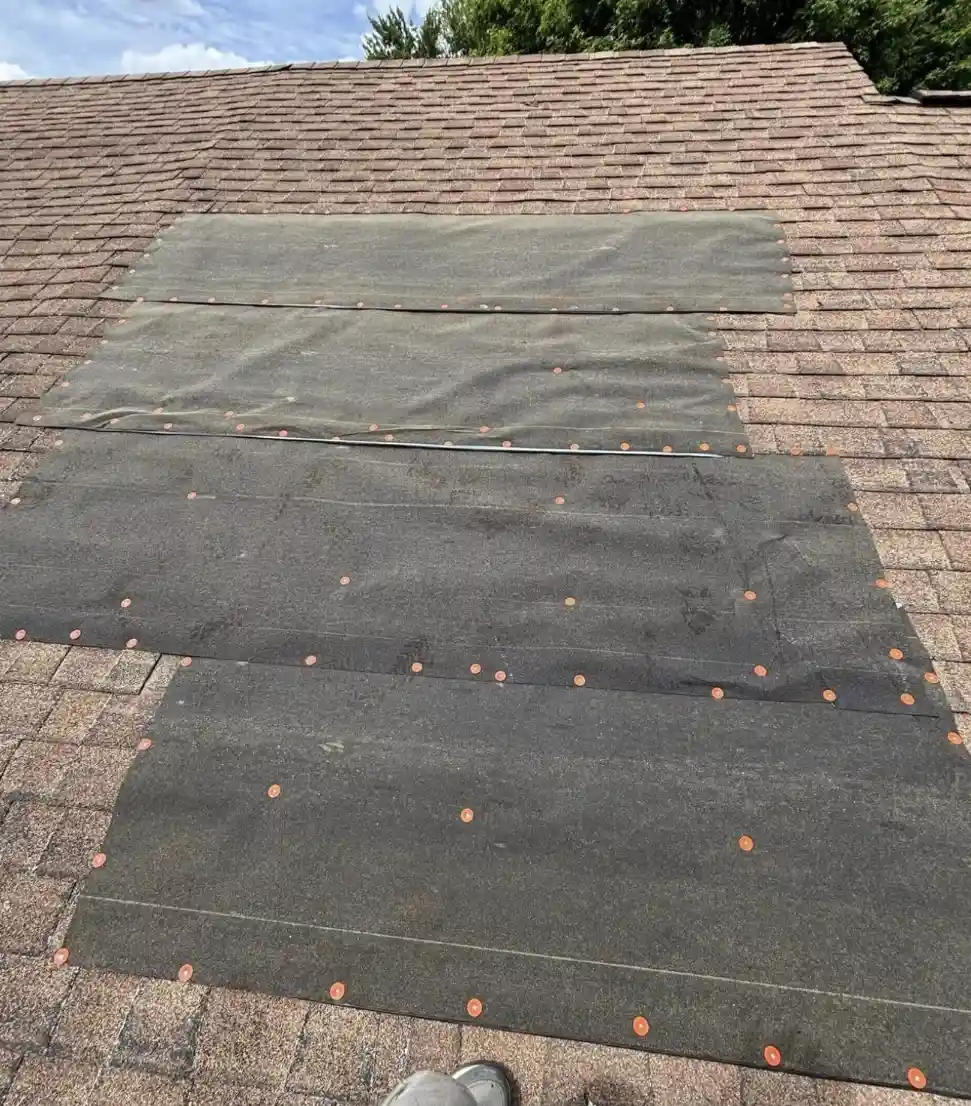
Emergency roof tarping after wind damage by leading Bismarck Roofing Company
  • Visible wind damage includes missing shingles, displaced ridge caps, lifted rake edge shingles, and exposed darker roof deck areas. Invisible wind damage, which is more common and more consequential, includes broken adhesive seal on shingle tabs that have laid back flat after the wind stopped.

    The invisible type requires getting on the roof to identify. You cannot reliably assess the full picture from the ground.

  • It depends significantly on the roof age, installation quality, and material condition. Properly installed quality shingles in good condition are rated to resist specific wind speeds based on their classification. Shingles that were installed with fastening shortcuts, have aging adhesive seals from prior UV exposure, or are at the end of their service life can show damage at lower wind speeds than their rating suggests.

    After any event with sustained winds above 50 mph or gusts above 60 mph, a professional inspection is worth scheduling.

  • From the ground, you can sometimes see shingles that appear slightly out of alignment, ridge cap sections that look displaced, or rake edge shingles that appear lifted.

    The more important question is whether adhesive seal failure has occurred on shingles that appear intact. That requires a professional getting on the roof and checking for tabs that lift without the resistance of an intact seal beneath them.

  • In most cases, shingles that have been lifted but not physically damaged can be re-sealed and refastened if the underlying shingle material is in otherwise good condition. Shingles that have been torn, creased, or physically broken during a wind event typically need replacement.

    The scope of repair versus the overall condition of the roof together determine whether targeted repair or broader replacement is the appropriate answer.

  • Most standard North Dakota homeowner policies include windstorm as a named covered peril. Coverage depends on your specific policy terms, your deductible structure, the documented damage, and your carrier’s evaluation.

    We document legitimate wind damage thoroughly with photographs and written findings. We never guarantee claim approval or settlement amounts. Filing promptly after a storm event is always advisable.

  • Usually a combination of factors. Adhesive seal failure from age or temperature, inadequate fastening during original installation, insufficient nail count or high nail placement, inadequate starter course at the eave or rake, and the compounding effect of prior damage from previous storm events.

    A single 70 mph gust does not always produce blow offs on its own. It reveals weaknesses that were already present in the roofing system.

  • No. A wind damaged or wet roof is a fall hazard. Storm debris may also be present. Leave the roof inspection to a professional.

    You can photograph visible damage from the ground or from a ladder at the eave level for documentation purposes, but walking the roof surface after a wind event is not worth the risk.

  • Filing promptly after a storm event is always the advisable approach. The longer you wait, the harder it becomes to tie specific damage to a specific storm event rather than normal wear, and the more subsequent weather exposure can change the picture.

    Check your specific policy for the filing window that applies to your coverage. If you are unsure, contact your carrier or agent directly.

Schedule Your Wind Damage Roof Inspection

Call Bismarck Exterior Pros for Wind Damage Roof Inspection in Bismarck.

A wind event went through your area. Your roof may look fine from the driveway. It may genuinely be fine. Or it may have broken adhesive seals across fifteen percent of your shingle field that will let water in during the next rain and compound through the coming winter.

There is one way to know. A professional gets on the roof, examines the actual condition of the shingle field and every vulnerable location, documents what they find, and gives you an honest picture. No pressure. No forms. No promises we cannot keep. Just a straight assessment of what the wind actually did to your roof.

  • Licensed & Insured
  • 5+ Years Local Experience
  • Seal Failure Detection
Call now to schedule your wind damage roof inspection.
Talk to a Local Roofer